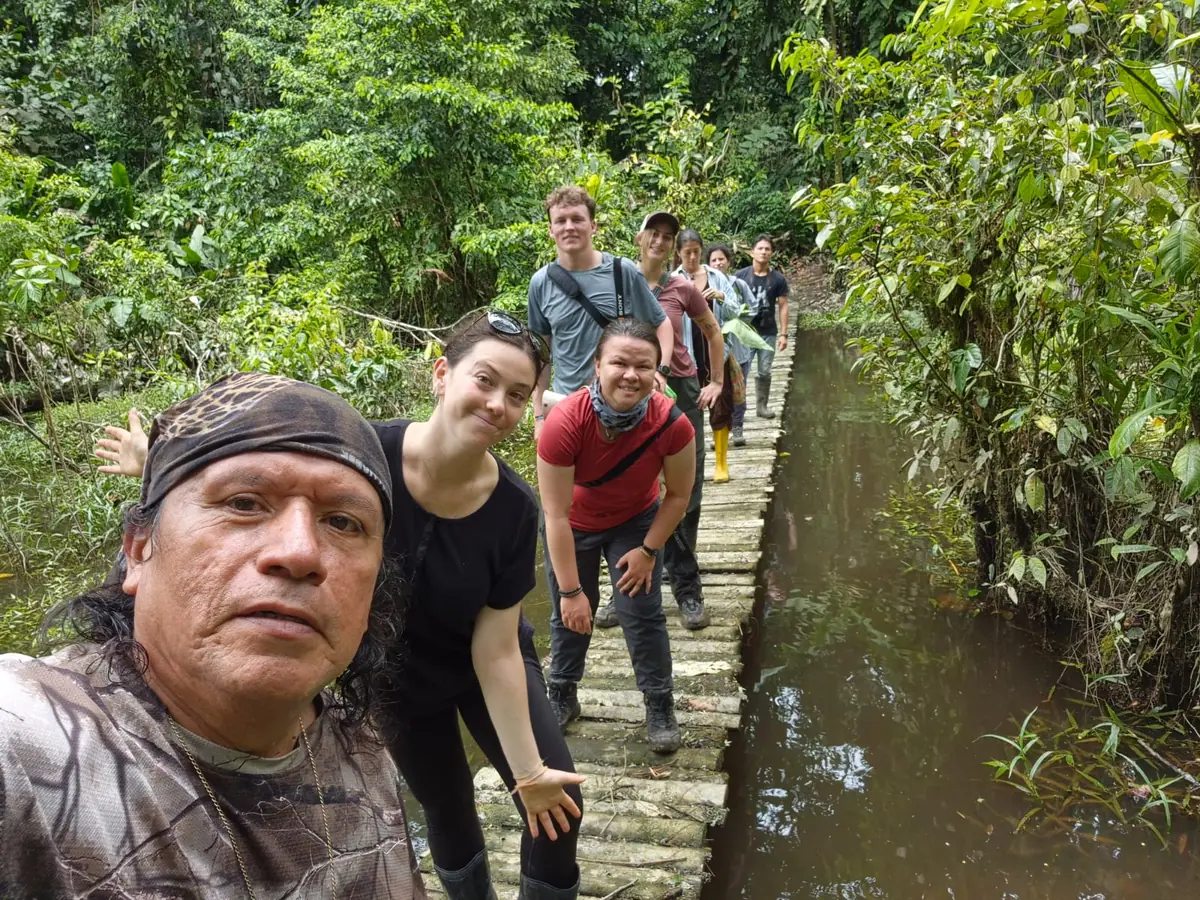
Group of travelers and their guide crossing a boardwalk over the flooded forest

9 itineraries · 1 to 4 days

Nine ways into the rainforest

Every one leaves from Coca, every one is led by people born here, and every one funds our work with the primates on the island.


One day

Sumak Allpa Taracoa

Sumak Allpa Island lies 45 minutes from Coca by canoe: a biodiversity management and environmental education program designed to conserve the threatened primate population. In the afternoon, Taracoa Lagoon — a singular body of water with a striking black color, ringed by flooded-forest vegetation that recalls ancient channels of the Napo River from thousands of years ago.
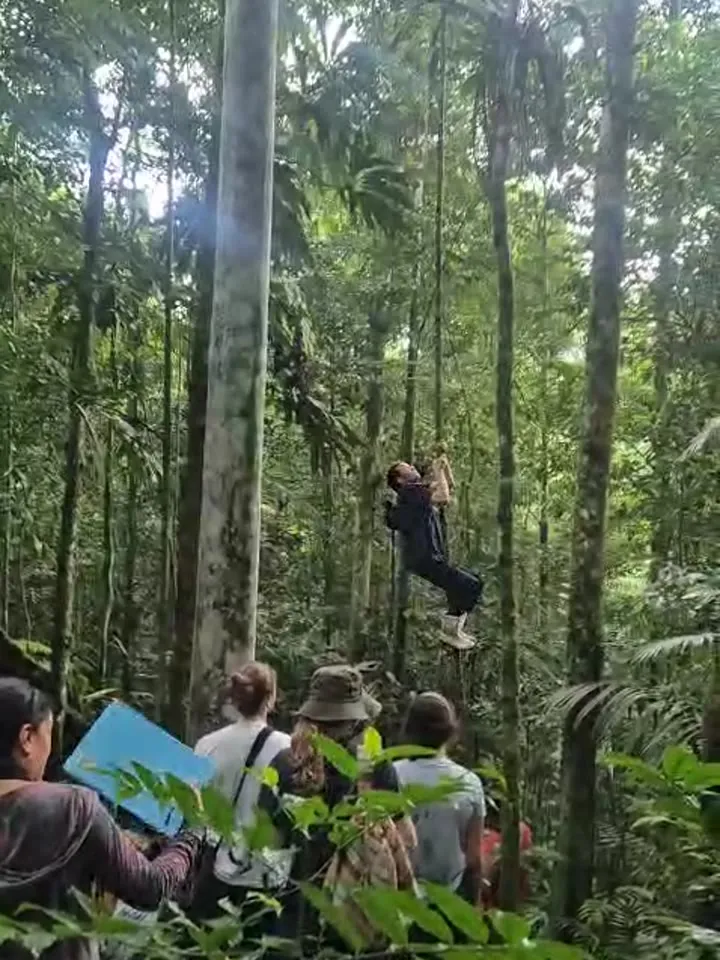
Group watching a monkey in the rainforest canopy

Day 1

  • Depart Coca, the gateway to the Amazon, along the Napo River to the Sumak Allpa Environmental Interpretation and Biodiversity Management Center.
  • Welcome talk.
  • Forest walk to get to know the different primate species managed by the project.
  • Lunch.
  • Medicinal plants.
  • From Sumak Allpa to Taracoa Lagoon on a fascinating exploration of várzea and flooded forest.
  • Cruise the lagoon from 4:30 to 6:30 pm, admiring the area’s flora and fauna.
  • Return to Coca, about 45 minutes by canoe.
One day

Yasuní in a day

We leave before dawn to reach the clay licks just as the parrots gather to eat clay. The most biodiverse place on the planet, there and back in a single day.

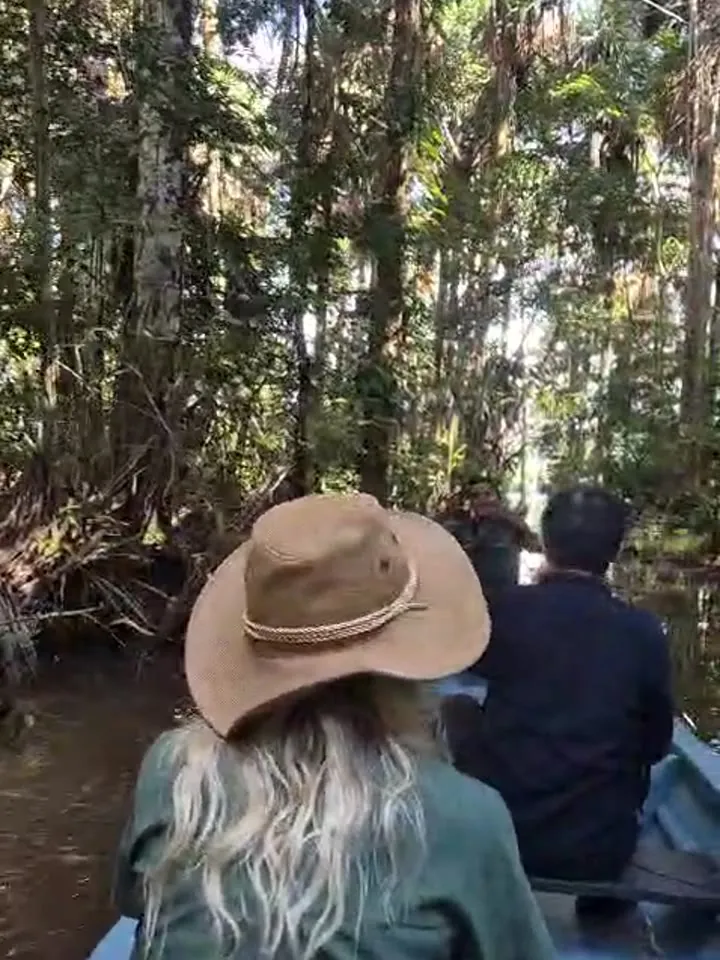
Canoe navigating a narrow channel in the flooded forest

Day 1

  • Depart Coca, the gateway to the Amazon, along the Napo River toward Yasuní National Park.
  • Visit the parakeet and parrot clay licks.
  • Cultural activities with the Kichwa community of Añangu.
  • Short walk inside the park and a climb up the 45-meter canopy tower.
  • Head back along the Napo, two hours by canoe to the Sumak Allpa center.
  • Environmental briefing and a forest walk to find the island’s different primate species.
  • Return to Coca, 45 minutes by boat.

Bring insect repellent and sunscreen: in Yasuní they’re essential.

One day

Toxic Tour

The tour that exposes the impact, and the responsibility, of the oil industry in the Amazon. It isn’t a pleasant outing: it’s the one that explains everything else.

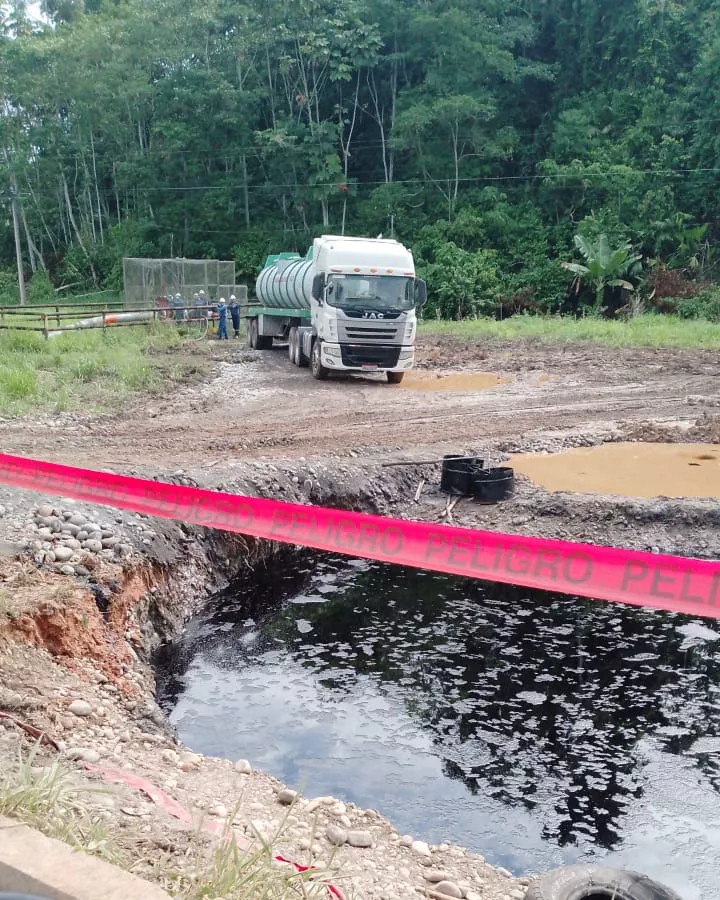
Crude oil pit cordoned off with hazard tape next to a tanker truck in an oil field

Day 1

  • Depart Coca.
  • Drive to the Sacha and Shushufindi oil fields, two hours by car.
  • First stop at the Sacha Central Facility, with an overview of how oil fields operate in the Amazon.
  • Visit the pits where formation water was dumped and buried, with leftover crude from spills overflowing straight onto farmland.
  • See a gas flare and learn how it affects insect populations.
  • Visit the Loma del Tigre community and talk about the social impacts of oil extraction.
  • Visit an open pit to see firsthand how the waste was dumped.
2 days · 1 night

Sumak Allpa and Limoncocha

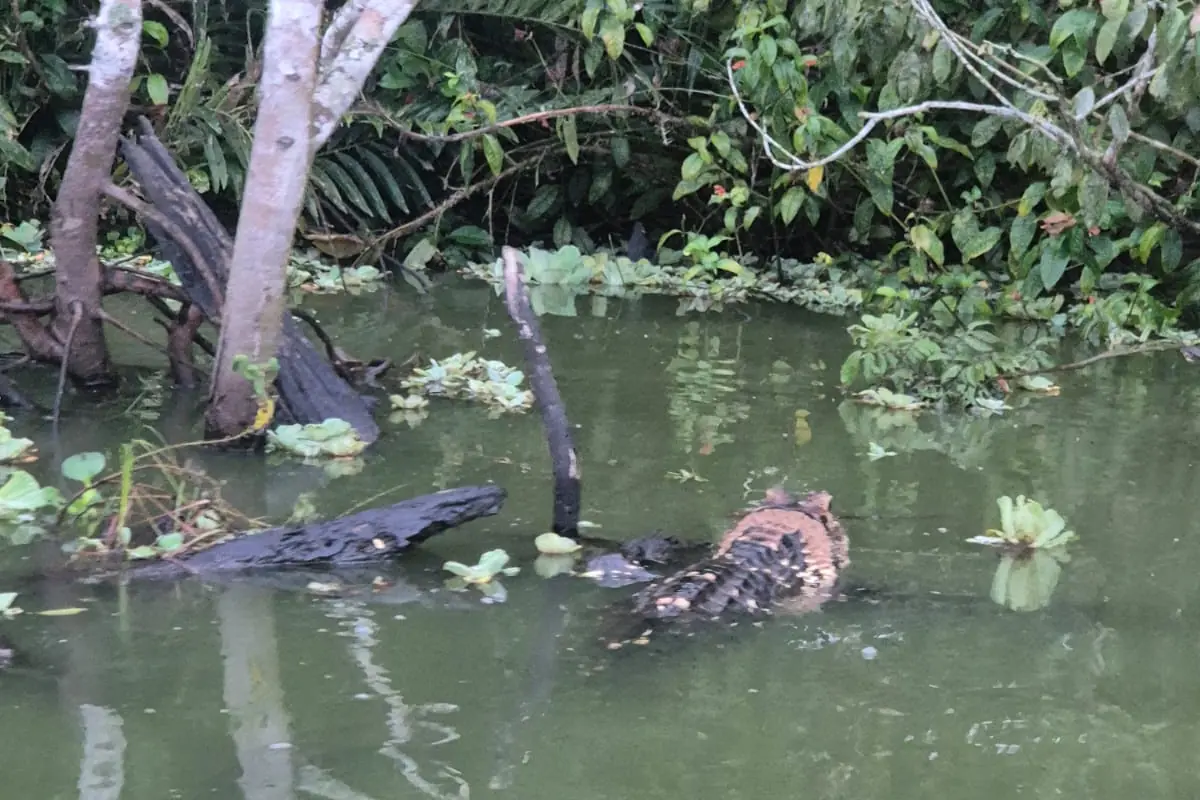
The island’s primates, then Limoncocha lagoon, the most emblematic black caiman sanctuary in the Ecuadorian Amazon.

Black caiman among the lagoon’s vegetation

Day 1

  • Depart Coca by boat for the Sumak Allpa center, a 40-minute ride.
  • Environmental introduction and a forest walk in search of the island’s nine monkey species.
  • Lunch on the island.
  • Depart for Limoncocha Biological Reserve: 40 minutes by boat and 10 by car.
  • Tour of the lagoon to watch birds and monkeys.
  • At night, an outing to see bioluminescent fireflies and black caiman.

Day 2

  • Early breakfast.
  • Birdwatching on the lagoon, looking for the area’s rarest species.
  • A two- to three-hour walk through the surrounding forest, observing animals and plants.
  • Return for lunch.
  • One last forest walk.
  • Return to Coca, two hours by boat.
2 days · 1 night

Sumak Allpa, Limoncocha and Yasuní

Three territories in two days: the primate island, the caiman lagoon and the clay licks of Yasuní. Overnight in Pashpancho.

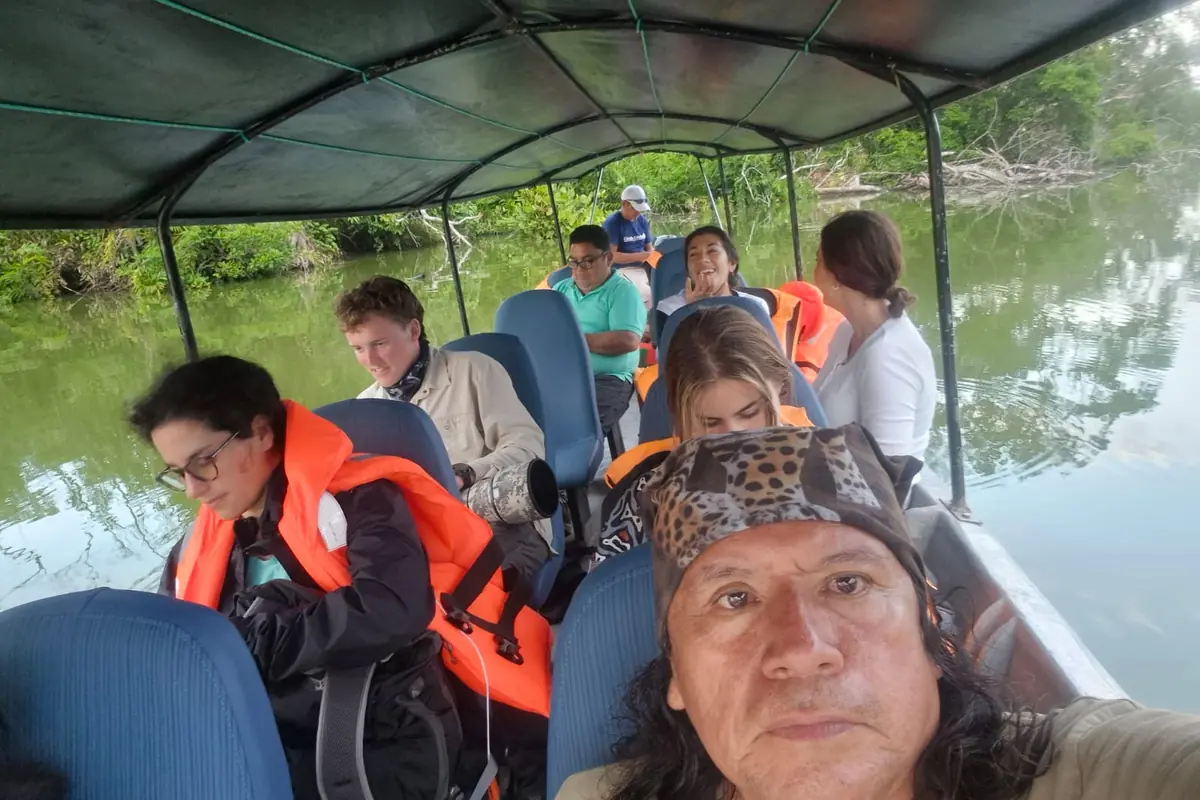
Passengers in life jackets traveling on the Napo River

Day 1

  • Depart Coca by boat for the Sumak Allpa center, a 40-minute ride.
  • Environmental introduction and a forest walk in search of the island’s monkeys.
  • Lunch on the island.
  • Depart for Limoncocha Biological Reserve: 40 minutes by boat and 10 by car.
  • Tour of the lagoon, watching birds and monkeys.
  • At night, bioluminescent fireflies and black caiman.
  • Overnight in Pashpancho, dinner included.

Day 2

  • The day begins.
  • Breakfast and departure for Yasuní, one hour by boat.
  • Climb the tower to watch birds and primates first thing in the morning.
  • Visit the clay licks where the parrots gather.
  • Forest walk observing different animal species.
  • One last chance to see parrots at the clay licks inside the forest.
  • After lunch, a visit to the Kichwa community of Añangu.
  • Return to Coca, four hours by boat.
3 days · 2 nights

Sumak Allpa, Limoncocha and Yasuní

The long version: you sleep inside Yasuní and head out at night in search of frogs, insects, snakes and, with luck, a jaguar.

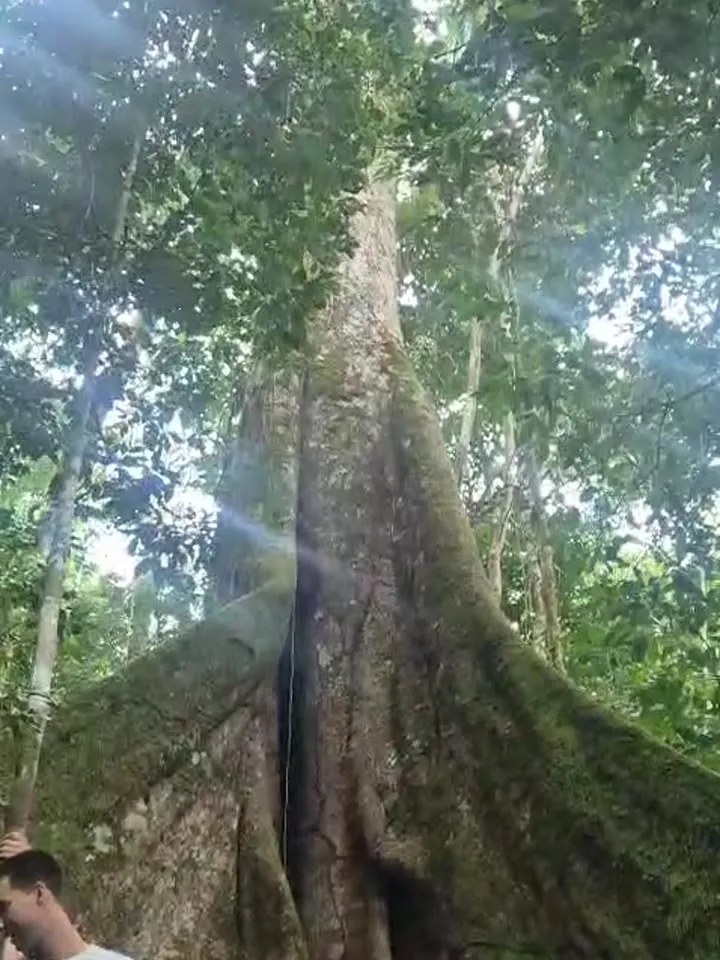
Crown of a giant kapok tree seen from the base of its trunk

Day 1

  • Depart Coca by boat for the Sumak Allpa center, a 40-minute ride.
  • Environmental introduction and a forest walk in search of the island’s monkeys.
  • Lunch on the island.
  • Depart for Limoncocha Biological Reserve: 40 minutes by boat and 10 by car.
  • Tour of the lagoon, watching birds and monkeys.
  • At night, bioluminescent fireflies and black caiman.

Day 2

  • The day begins.
  • Breakfast and departure for Yasuní, one hour by boat.
  • Observation tower first thing in the morning to see birds and primates.
  • Clay licks where the parrots gather.
  • Forest walk observing animals and plants.
  • Second visit to the clay licks inside the forest.
  • Lunch in Yasuní.
  • Night walk to spot nocturnal species: frogs, insects, snakes and perhaps a jaguar.
  • Dinner and camp in Yasuní.

Day 3

  • Early breakfast.
  • Boat trip to see the parrots if the weather didn’t allow it the day before.
  • Long forest walk, with time to take in animals, plants and viewpoints.
  • Lunch in Yasuní.
  • Visit the Añangu community to learn about their cultural activities.
  • Return to Coca, three hours by boat.
3 days · 2 nights

Shiripuno · Waorani territory

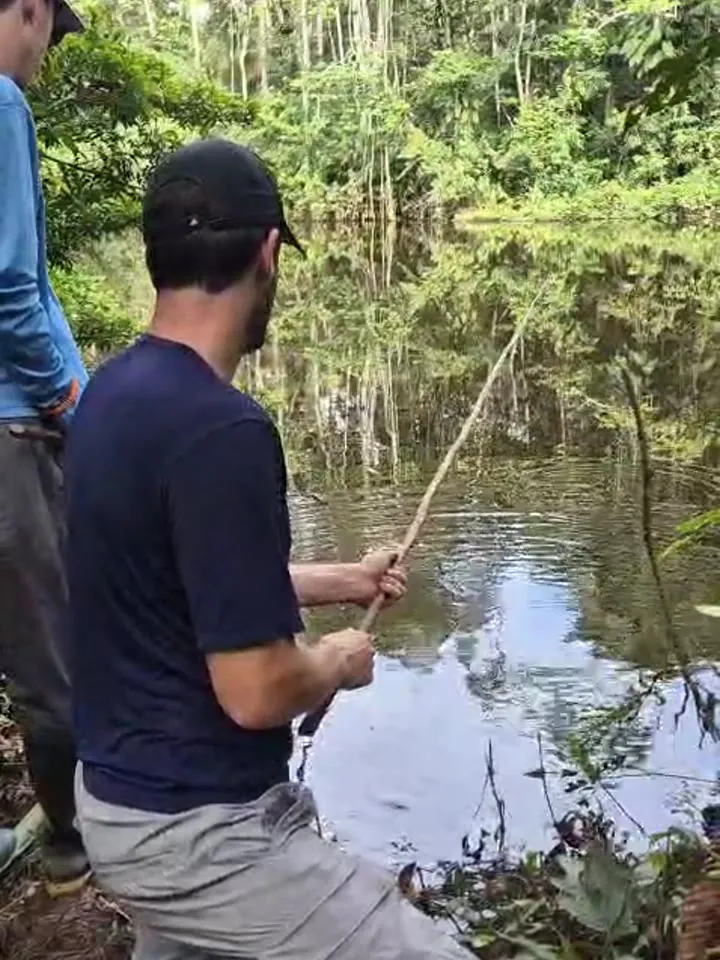
The Shiripuno River is part of Waorani territory. You sleep at Gaba’s family camp, fish for piranhas, walk with Waorani warriors and learn what each plant is used for.

Visitor fishing for piranhas with a handmade rod on the Shiripuno

Day 1

  • Depart Coca along the Vía Auca, two hours to the Shiripuno River.
  • Intangible Zone checkpoint, then an hour and a half downriver by canoe.
  • Arrival at Gaba’s family camp.
  • Lunch at the camp.
  • In the afternoon, 45 minutes downriver for piranha fishing and a forest walk.
  • Return after dark, looking for caimans.
  • Late dinner at the camp.

Day 2

  • Wake-up.
  • Breakfast.
  • Four-hour walk escorted by Waorani warriors, learning how they use the forest.
  • Visit to a viewpoint over the rainforest.
  • Lunch at the camp.
  • Cultural activities led by the women of the community.
  • The men teach how to handle the blowgun and spears.
  • Dinner at the camp.

Day 3

  • Wake-up.
  • Birdwatching over the Shiripuno River.
  • Breakfast.
  • Waorani ethnobotany: how plants are used in their culture.
  • Lunch at the camp.
  • Return to the Shiripuno bridge, two hours by boat.
  • Return to Coca, two hours by car.
4 days · 3 nights

Cocaya · river dolphins

Our longest and most remote expedition. Downriver to Cocaya, home to pink and gray river dolphins you can watch and feed.

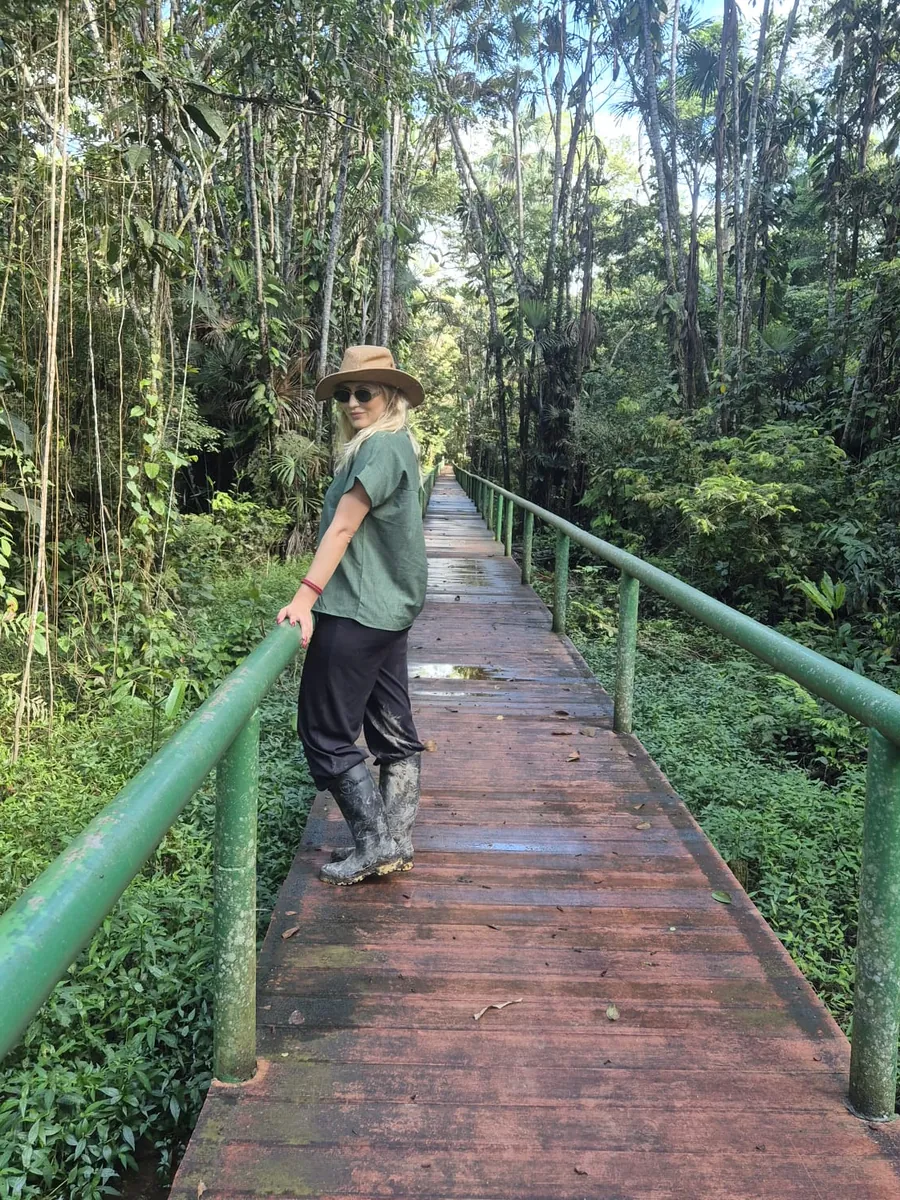
Hiker on a wooden boardwalk in the flooded forest

Day 1

  • Depart Coca by boat for the Sumak Allpa center, a 40-minute ride.
  • Environmental introduction and a forest walk in search of the island’s monkeys.
  • Lunch on the island.
  • Depart for Limoncocha Biological Reserve: 40 minutes by boat and 10 by car.
  • Tour of the lagoon, watching birds and monkeys.
  • At night, bioluminescent fireflies and black caiman.

Day 2

  • The day begins.
  • Breakfast and departure for Yasuní, one hour by boat.
  • Observation tower to see birds and primates.
  • Clay licks where the parrots gather.
  • The public boat picks us up in Yasuní, bound for Cocaya.
  • An hour later, a stop in Pañacocha for lunch.
  • Five more hours on the river to Rocafuerte, then a switch to a private canoe.
  • A final hour to Cocaya. Dinner and settling into the cabins.

Day 3

  • Early breakfast.
  • Outing to see the famous pink and gray river dolphins.
  • Tour of the lagoons, watching birds and monkeys.
  • Back to the lodge for lunch.
  • Rainforest walk.
  • Second outing to feed and watch the dolphins.
  • Overnight in Rocafuerte.

Day 4

  • A full day of travel back.
  • Wake-up.
  • The public boat picks us up.
  • Stop in Pañacocha for lunch.
  • Arrival in Coca between 15:00 and 17:00, depending on river conditions.
4 days · 3 nights

Pañacocha · river dolphins

Sumak Allpa Island, Limoncocha Biological Reserve, Yasuní National Park and Pañacocha Protected Forest: a flooded forest complex with the Pañacocha and Piwali lagoons, home of the enigmatic pink river dolphin.

Canoe making its way along a channel in the flooded forest

Day 1

  • Depart Coca, gateway to the Amazon, along the Napo River to the Sumak Allpa Environmental Interpretation and Biodiversity Management Center.
  • Welcome talk.
  • Forest walk to meet the project’s primate species: woolly monkey, pygmy marmoset, squirrel monkey and golden-mantled tamarin.
  • Lunch.
  • Medicinal plants.
  • Depart for Pompeya.
  • Settling in.
  • Arrival at Limoncocha Biological Reserve (40 minutes by canoe and 10 by car).
  • Boat ride around the lagoon to observe its flora and fauna: horned screamer, striated heron and hundreds of other birds.
  • Night-time black caiman spotting on the lagoon.
  • Return to the Paspanchu community cabins.
  • Dinner.

Day 2

  • Boat ride along the Napo River to Yasuní National Park.
  • Visit the clay licks, where parrots and parakeets of many species eat clay, a vital part of their diet.
  • Forest walk and a visit to the parakeet and red macaw clay lick.
  • Lunch.
  • Transfer to Pañacocha Protected Forest along the Pañayaku River, watching várzea give way to flooded forest among toucans, sloths, herons, macaws and monkeys.
  • Dinner.

Day 3

  • Canoeing on the Pañayaku River, birdwatching and searching for dolphins.
  • Breakfast.
  • Forest walk.
  • Lunch.
  • Piranha fishing and a boat ride observing flora and fauna.
  • Dinner.

Day 4

  • Breakfast.
  • Pañacocha Protected Forest.
  • Visit the Kichwa community of Añangu and its cultural activities.
  • Lunch.
  • Return to Coca, arriving around 17:00.

Includes transportation, guide, lodging, meals, excursions, rubber boots and rain poncho.

All activities are subject to change due to weather conditions.


Before you go

What to bring to the rainforest

Whether it’s one day or four, this short list heads off most problems.

Insect repellent

Essential. In Yasuní and on the Limoncocha lagoons you’ll be grateful for it every hour.

Sunscreen

There’s no shade on the river. The hours on the boat are when you burn the most.

Rubber boots

The forest floor is almost always muddy. Add quick-dry long-sleeved clothing and a rain poncho.

Flashlight and binoculars

They completely transform night outings and birdwatching. Bring a dry bag for your camera.

Build a custom itinerary